لوگوی کاتیزان

گروه تولیدی کاتیزان صنعت

ابزار حرفه ای، با دوام، ساخته شده در ایران

Katizan Logo

Katizan Sanat Group

Tools Engineered for Professionals

The Invisible Value of Integrity in Industrial Work

The Invisible Value of Integrity in Industrial Work

The Invisible Value of Integrity in Industrial Work   In a world of machines, deadlines, and productivity metrics, one quality often goes unnoticed—but makes all the difference: integrity. It doesn’t come with a manual. It’s not listed on your toolbox. But its presence—or absence—defines the soul of every industrial team.   1. Integrity Builds Trust In any industrial setting, workers rely on each other for safety, precision, and coordination. Integrity means doing what you say you will, owning your mistakes, and respecting shared responsibilities. When integrity is present, teams operate with trust and ease. When it’s missing, friction and fear take over.   2. Honesty Over Shortcut Sometimes, it’s tempting to cut corners—skip a calibration, ignore a noise, or rush
Don't Let Your Tools Slow You Down: Maintenance Tips That Boost Efficiency

Don’t Let Your Tools Slow You Down: Maintenance Tips That Boost Efficiency

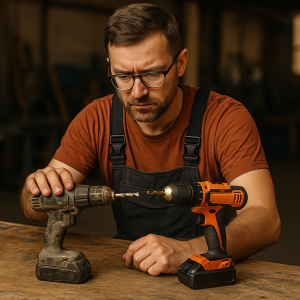
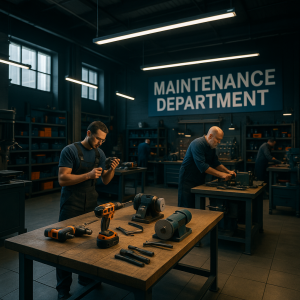
Don’t Let Your Tools Slow You Down: Maintenance Tips That Boost Efficiency   Even the best tools can become obstacles if they’re not properly maintained. A dull blade, a loose handle, or a clogged filter might not seem like a big deal—but over time, these small inefficiencies slow down your entire workflow. For professionals, maintenance isn’t just about tool life—it’s about performance.   1. Keep Blades and Edges Sharp Dull cutting tools force you to use more energy, take more passes, and risk damaging materials. Whether it’s a chisel, drill bit, or utility knife, sharpness equals speed and precision. Regular sharpening is a quick task that saves hours over time.   2. Lubricate Moving Parts Friction reduces speed. From wrenches

Small Habits Big Impact How Daily Workshop Routines Build Strong Teams

Small Habits Big Impact How Daily Workshop Routines Build Strong Teams

Small Habits, Big Impact: How Daily Workshop Routines Build Strong Teams   When people think of success in the industrial world, they often imagine cutting-edge tools, high budgets, or breakthrough innovations. But the real secret behind many high-performing teams lies in something much simpler: consistent, positive daily habits.   1. Starting the Day Together Whether it’s a five-minute meeting, a shared coffee, or a daily safety check, starting the day as a group sets a unified tone. These small routines help build connection and foster trust. They allow team members to align on tasks and raise potential concerns early, reducing misunderstandings down the line.   2. Clean as You Go One of the simplest but most powerful habits in a

The Smart Way to Expand Your Tool Collection What to Buy Next and Why

The Smart Way to Expand Your Tool Collection What to Buy Next and Why

The Smart Way to Expand Your Tool Collection: What to Buy Next and Why   Building a tool collection isn’t about owning everything—it’s about owning the right things. A well-curated toolbox grows with your skills, your projects, and your environment. But with so many tools available, how do you decide what to buy next? Smart expansion means understanding your needs, identifying gaps, and investing in quality.   1. Start with What You Use Most Review your current work. Which tools are in your hand every day? These are your “core” tools, and if any are low-quality or failing, upgrade them first. A premium version of your most-used wrench, screwdriver, or measuring device can improve comfort, accuracy, and performance immediately.  

What Makes a Tool Innovative The Features That Set Modern Equipment Apart

What Makes a Tool Innovative The Features That Set Modern Equipment Apart

What Makes a Tool Innovative: The Features That Set Modern Equipment Apart   Innovation in tools isn’t just about looking modern or adding digital displays. True innovation changes the way professionals work—making tasks safer, faster, and more efficient. As industries evolve, so do the expectations from the tools we use daily. But what exactly defines an “innovative” tool?   1. Ergonomic Design Modern tools prioritize comfort and safety. Handles shaped to reduce wrist strain, lighter materials that don’t compromise strength, and grips that adapt to different hand sizes—these features reduce fatigue and long-term injury risk. Innovation today starts with how a tool feels in your hand.   2. Smart Integration From drills with torque sensors to wrenches with digital torque

Focus Over Speed Why Slower Work Can Mean Smarter Results

Focus Over Speed Why Slower Work Can Mean Smarter Results

Focus Over Speed: Why Slower Work Can Mean Smarter Results   In today’s fast-paced industrial world, speed is often celebrated. Quicker turnaround, faster assembly, shorter deadlines. But beneath the surface, an important truth remains: speed without focus leads to mistakes, rework, and inefficiency. True productivity comes from deliberate, focused effort—not from rushing.   1. Fast Work Often Leads to Flawed Work When speed becomes the priority, precision suffers. Misalignments, measurement errors, and tool misuse are common consequences of rushing. In contrast, workers who slow down enough to double-check their process often produce cleaner, more reliable results the first time.   2. Deep Focus Builds Mastery Concentration allows workers to absorb more from their task. They notice subtle differences in material,

Learning by Failing How Mistakes Make Better Industrial Workers

Learning by Failing How Mistakes Make Better Industrial Workers

Learning by Failing: How Mistakes Make Better Industrial Workers   In industrial environments, precision and reliability matter—but no professional becomes skilled without making mistakes along the way. Failure is not a weakness. It’s part of the process. The best workers are not those who never err, but those who learn, adapt, and grow from every mistake.   1. Safe Environments for Risk Mistakes in training environments should be welcomed—not punished. Whether it’s cutting a piece too short, misaligning a part, or using the wrong tool, each error offers a powerful learning moment. When workers are allowed to fail in safe, supervised settings, they develop problem-solving instincts that last a lifetime.   2. Emotional Growth Through Mistakes Failure teaches humility, resilience,

Repair or Replace Which Tool Decision Is Right for You

Repair or Replace Which Tool Decision Is Right for You

Repair or Replace: Which Tool Decision Is Right for You   Every professional faces the same dilemma at some point: a tool breaks or wears out—do you repair it or replace it? It’s not just about money; it’s about efficiency, safety, and long-term value. Knowing when to fix and when to move on is a core skill in any serious workshop.   1. Assess the Damage The first step is a clear evaluation. Is the damage cosmetic, mechanical, or structural? Surface rust or a dull blade can be addressed easily. But if the core components are bent, cracked, or unstable, repair might not be a safe option. Katizan Sanat always recommends a full inspection before making any decision.   2.