فارسی
فارسی
 EN
EN
Learning by Failing: How Mistakes Make Better Industrial Workers
In industrial environments, precision and reliability matter—but no professional becomes skilled without making mistakes along the way. Failure is not a weakness. It’s part of the process. The best workers are not those who never err, but those who learn, adapt, and grow from every mistake.
1. Safe Environments for Risk
Mistakes in training environments should be welcomed—not punished. Whether it’s cutting a piece too short, misaligning a part, or using the wrong tool, each error offers a powerful learning moment. When workers are allowed to fail in safe, supervised settings, they develop problem-solving instincts that last a lifetime.
2. Emotional Growth Through Mistakes
Failure teaches humility, resilience, and accountability. A technician who learns to own a mistake—and correct it—grows faster than one who avoids responsibility. These traits are essential in high-pressure workshop environments where teamwork and trust matter.
3. Technical Precision Starts with Inaccuracy
Ironically, mastering precision requires knowing what inaccuracy looks and feels like. Workers who’ve “got it wrong” before often understand measurements, tolerances, and process flow more deeply. They develop the mental muscle to anticipate and avoid similar errors in the future.
4. Reduces Fear of Trying
In rigid workplaces, fear of failure can paralyze growth. But when failure is treated as data—not disaster—workers feel safe to experiment, explore new tools, or suggest improvements. Innovation in industry thrives where mistakes are respected as learning curves.
5. Creates a Culture of Continuous Improvement
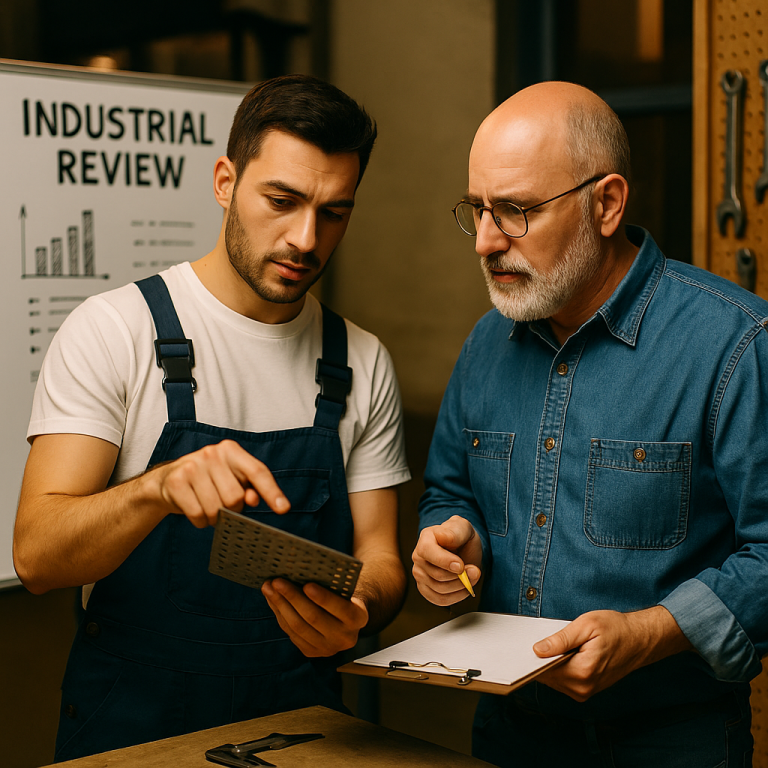
At Katizan Sanat, we believe every mistake is a step forward—if reflected upon. Our team reviews near-misses and process breakdowns not to blame, but to build better systems. Workers are encouraged to log, analyze, and share what went wrong. The result? A learning-driven culture where even experienced workers grow.
6. Teaches Self-Correction and Autonomy
Constant supervision isn’t sustainable. But workers who’ve been through failure often develop an internal compass. They double-check their setups, ask the right questions, and take initiative. In many ways, failing builds independence—one of the most valuable traits on any industrial team.
7. Failure Is Universal
From master welders to veteran machinists, every professional has failed—many times. Sharing those stories with trainees creates a bond of authenticity. It removes shame from the process and shows that even the best had to learn the hard way.
Final Thought
Perfection may be the goal—but failure is the path. The only real mistake is refusing to learn from one. In every workshop, on every bench, and with every tool, errors are invitations to grow. Accept them. Study them. And let them sharpen you into the industrial professional you’re meant to be.
In the hands of a learner, every mistake becomes a stepping stone. — Katizan Sanat